

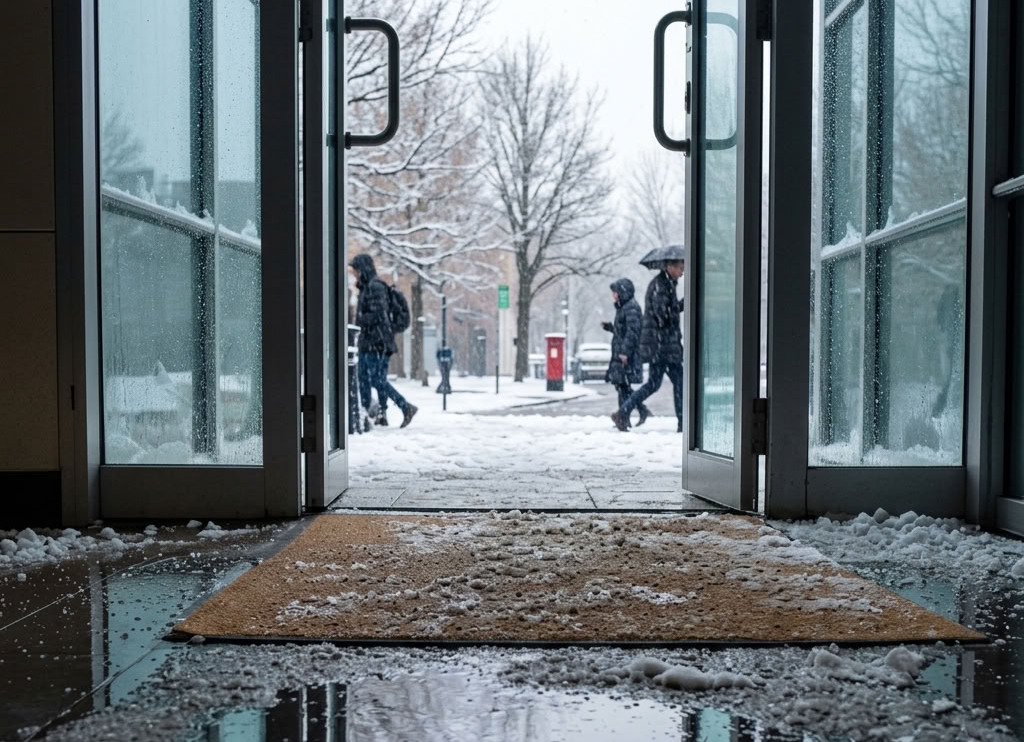
It's that time of year again. Dark mornings, endless drizzle, soggy leaves piling up by the entrance, and the familiar debate over whether it's cold enough to turn up the heating.
Sounds like your workplace?
Whether you're responsible for a busy warehouse, a shared office, a school or a healthcare facility, these little seasonal frustrations are surprisingly universal.
On their own, these might seem like minor annoyances, but left unchecked, some can quickly become workplace safety hazards as the colder, darker, and wetter months arrive.
The good news? You don't necessarily need a major overhaul to make a difference to workplace safety.
Sometimes, all it takes is 15 minutes, a fresh pair of eyes and a walk around the spaces your team uses every day.
1. Start at the entrance (where Winter usually follows us inside)
Picture a typical rainy Monday morning:
People are rushing through the entrance, shaking off umbrellas, wiping their shoes and heading straight to work. Within minutes, the floor is wet, umbrellas have been propped against the wall, and coats and bags are left by the door.
It's a familiar scene, and it's the perfect place to start your winter safety check.
Entrances are often the first place seasonal workplace safety risks appear, particularly where people are constantly coming and going.
Take a moment to check:
- Are entrance floors staying dry and slip-resistant?
- Is there somewhere practical to leave wet umbrellas
- Are coats, bags or personal belongings blocking walkways?
- Are wet-floor signs available when they're needed?
Small change, big difference: A well-positioned umbrella stand, designated coat storage and clear entrance signage can help prevent everyday clutter from becoming a safety hazard.
In warehouses and industrial facilities, pay particular attention to entrances shared by employees, visitors and delivery personnel. These spaces can become busy very quickly.

2. Look at your workplace in a different light
A walkway that feels perfectly safe at 2 pm in August might look very different at 7 am in November.
As daylight hours shorten, poor lighting and reduced visibility become much more noticeable, particularly around entrances, loading bays, outdoor pedestrian routes and storage areas.
In addition, when people are arriving early, finishing late or moving between buildings, being able to see clearly matters for safety.
Ask yourself:
- Are entrances, steps and pedestrian routes adequately illuminated?
- Can people easily distinguish walking areas from vehicle routes?
- Are corners, edges and changes in floor level clearly visible?
- Is important safety information easy to spot?
Small change, big difference: Clear floor markings, visible signs and protection profiles can help people recognise routes, boundaries and potential safety hazards at a glance.
For industrial environments, where pedestrians and moving equipment may operate close to one another, clear route identification is especially important.
It's a simple reminder that workplace safety isn't just about removing hazards. It's also about making the ones that remain easier to recognise.

3. Find the clutter everyone has stopped noticing
In busy workplaces, it's easy for clutter to build up without anyone really noticing: a corner becomes a temporary storage area, a chair doubles as a coat rack, items get left somewhere convenient until there's time to move them.
It's understandable - when space is limited, and people are focused on getting through the day, keeping every walkway and shared area clear isn't always straightforward.
Winter can add to the challenge, with extra coats, bags and wet-weather gear all needing somewhere to go. Without convenient storage, these items can gradually spill into shared spaces, creating obstructions that are easy to overlook as part of your daily routine.
During your walk, look for:
- Personal belongings spilling into shared spaces
- Trolleys or deliveries obstructing pedestrian routes
- Items stored near doorways or emergency exits
- Walkways that have gradually become narrower due to clutter
Small change, big difference: Accessible coat racks, practical storage areas and clearly marked pedestrian routes can help keep shared spaces organised and easier to navigate.
This is particularly useful in schools, hospitals and busy workplaces where people, equipment and personal belongings are constantly moving.
4. Check whether your signs are actually doing their job
We've all seen a sign so often that we barely register it anymore, but signage is only useful if people notice it, understand it and can act on it.
Winter is a good opportunity to look again at the information around your workplace.
Consider:
- Are important warnings positioned where people need them?
- Are pedestrian routes and restricted areas clearly identified?
- Are signs easy to read?
- Have temporary changes to layouts or access routes been communicated?
Small change, big difference: Clear door signs, information frames, and floor markings can make important messages more visible and help people move confidently through shared spaces.
In healthcare and education settings, where visitors may be unfamiliar with the building, clear and consistent signage is especially valuable.
5. Finally, walk the route your team actually takes
Don't just inspect the workplace from your desk or follow the route you normally take.
Walk the route of someone arriving for an early shift.
Follow the path from the warehouse entrance to the changing rooms. Walk from the reception area to a meeting room. Think about the journey a visitor, student, patient or new employee might make.
What do they see? Where might they hesitate? What obstacles have become so familiar that nobody mentions them anymore?
Better still, ask your colleagues.
“What's one thing that gets in your way during the winter?”
You might be surprised by the answers.
Sometimes, the people who use a space every day are the first to spot the small changes that could make it safer, more comfortable and more practical for everyone.
And that's what good workplace safety is really about: creating an environment that works for the people using it.
Your 15-minute winter check
You don't need to inspect every corner of your building in one go. Start with a quick visual check of the areas people use most.




Leave a comment
All comments are moderated before being published.
This site is protected by hCaptcha and the hCaptcha Privacy Policy and Terms of Service apply.