

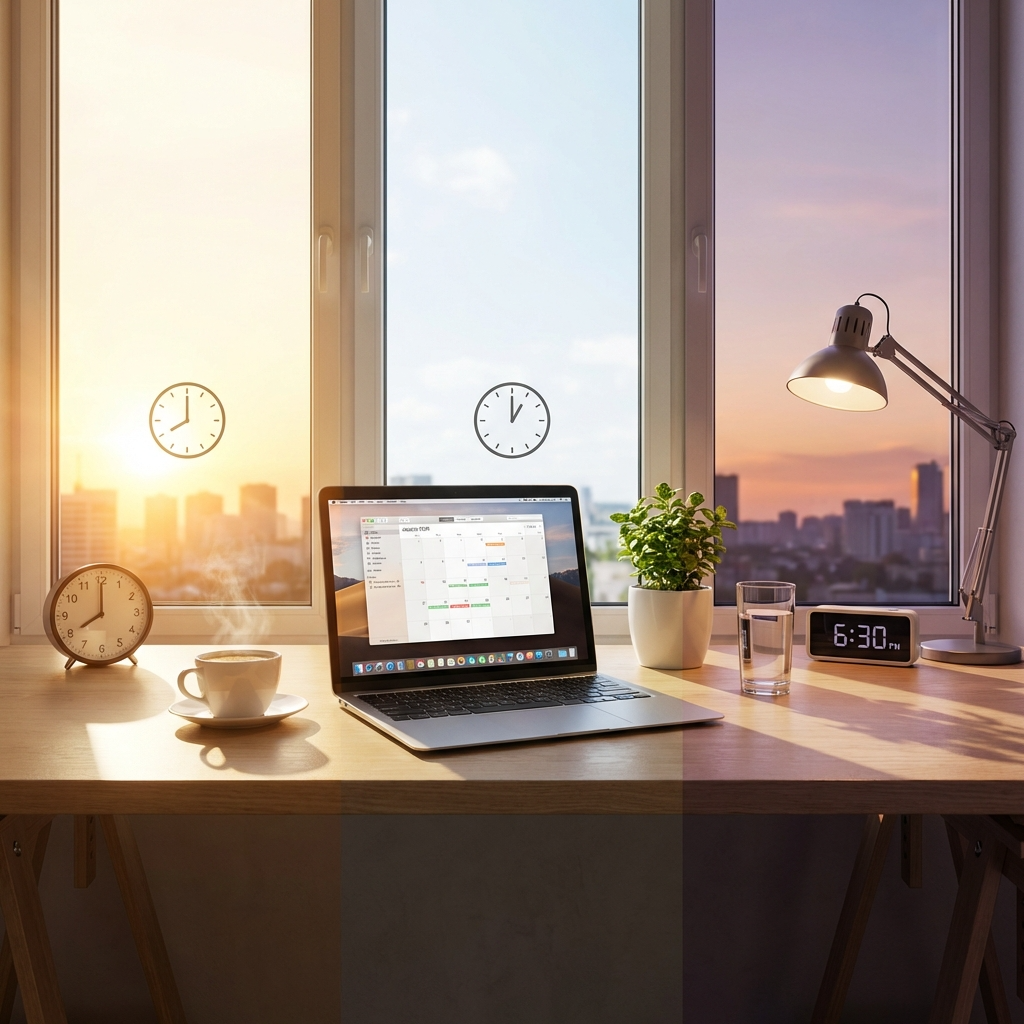
If you’ve ever wondered why you can power through complex work at 9 am, feel foggy by early afternoon, then regain focus again later in the day, you’re not doing anything wrong.
You’re just human.
One of the biggest myths in modern office culture is that productivity is a fixed trait. That if you’ve ‘found your style’, you should be able to apply it consistently from the first email to the last meeting. In reality, no one works the same way all day - and trying to force consistency often creates more friction than focus.
Here’s the truth:
Focus Isn’t Linear - and That’s Not a Flaw
Across a typical workday, most people move through several distinct modes of work:
- Morning clarity: planning, problem-solving, analytical thinking
- Midday execution: meetings, collaboration, task focus
- Afternoon fatigue: reduced tolerance for friction, clutter, or discomfort
- Late-day reflection: admin and reviewing
These shifts aren’t signs of weakness. They’re biological, cognitive, and predictable. The common problem is expecting a static environment to support your dynamic needs.
Instead of asking, “How do I stay focused all day?”
A better question is: “How can my workspace support the way my focus naturally changes?”
A Desk That Adapts to Your Work
Morning planning often benefits from visibility - notes, tools, and priorities in view. Deep work later in the day usually needs the opposite: fewer visual demands and more clarity.
Adaptable desk organisation supports this natural progression. When layouts can be reconfigured quickly, the desk becomes responsive instead of restrictive. You’re not tidying for the sake of aesthetics - you’re reducing mental strain when your tolerance for clutter drops.
As many office workers know all too well:
What feels fine at 9 am can feel overwhelming at 3 pm.

Physical Adjustments to Prevent Afternoon Mental Fatigue
As the day goes on, micro-strains add up - eye fatigue, back pain, subtle discomfort that chips away at focus attention.
Adjustable monitor arms or laptop stands allow you to adjust viewing angles depending on the task: closer for detail-heavy work, further back for reading or collaboration. These small changes reduce strain without interrupting flow.
Designing for Decision Fatigue
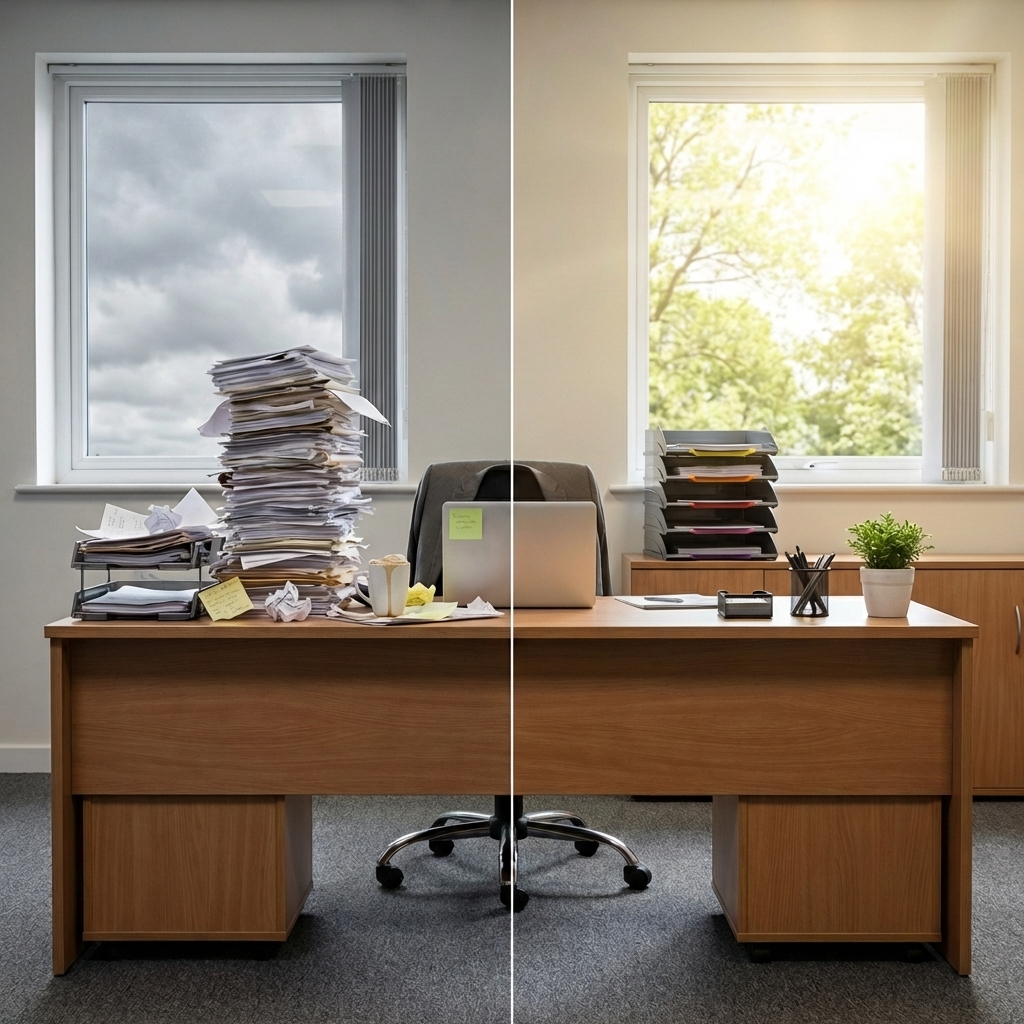
Clutter tolerance decreases as mental energy drops. When your workspace stays visually busy, your brain works harder than it needs to.
Deliberate cable management and minimalist accessories aren’t about perfection - they’re about preserving clarity later in the day, when your decision fatigue is highest. Visual calm becomes a form of mental support - especially during afternoons when focusing on mental clarity is harder.
Desk accessories - when chosen intentionally - can act as stabilising cues without adding clutter. They provide continuity through transitions in your attention, helping you feel anchored even as tasks change.
The Bigger Picture: Designing for Real Workdays
The most effective work environments aren’t optimised for a single ‘ideal’ version of productivity. They’re designed to adapt.
Knowing your own productivity style is one thing, but recognising that your focus fluctuates throughout the day allows you to make the most of your rhythm.
You no longer have to change your behaviour to match your desk. Instead, adjust your desk to match your day.
For businesses, facilities teams, and dealers, this distinction matters. Products that adapt quickly, support multiple work modes, and remove friction during transitions don’t just improve comfort - they build trust.
They show an understanding of how people actually work.
So when purchasing decision-makers feel that level of understanding, the conversation shifts from “Does this fit the spec?” to “This genuinely supports our people.”
That’s not just good design. It’s good business.


Leave a comment
All comments are moderated before being published.
This site is protected by hCaptcha and the hCaptcha Privacy Policy and Terms of Service apply.